Installing the ignition coils on the 5th cylinder
NOTE:
RISK OF DAMAGE
Damage to the ignition coil.
The silicone hose of the ignition coil must not be contaminated by fuel as this can lead to failure of the ignition coil.
Damage to the ignition coil.
The silicone hose of the ignition coil must not be contaminated by fuel as this can lead to failure of the ignition coil.
- When working on the fuel system, cover the ignition coils with suitable materials and remove where required.
- Do not oil or grease the silicone tube of the spark plug socket. Do not use any protection or maintenance products (e.g. silicone spray rubber care products, rust remover, etc.).
NOTE:
The description is for one component only. The procedure is identical for all further components.
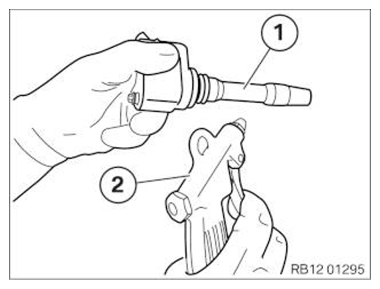
- Before installing the ignition coils: Fuse the spark plug shafts (2) out with an air gun (1).
The spark plug shafts must be free from oil, fuel residue, and coolant residue.
- Position the ignition coil and gently push it to the stop, if necessary by twisting it back and forth slightly.
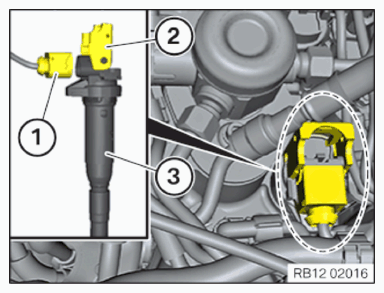
- Push connector (1) onto the ignition coil with the connector fastener (2) open.
- Carefully close the connector fastener (2).
On closing locking lever, the connector (1) must lie on counter piece almost gap-free. In the process, the crank webs of the locking lever are positioned inside the counter piece.
- Ensure that no cables are crushed or damaged.
The connector fastener must snap into place without great effort.
- Repair damaged cables.
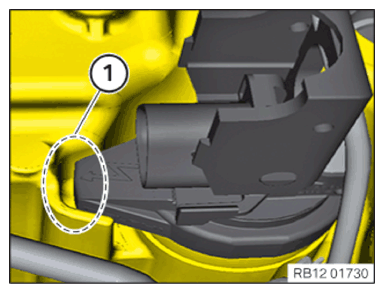
- Check the anti-twist lock (1).
The rubber seal of the ignition coil must completely enclose the opening for the spark plug on the cylinder head cover.