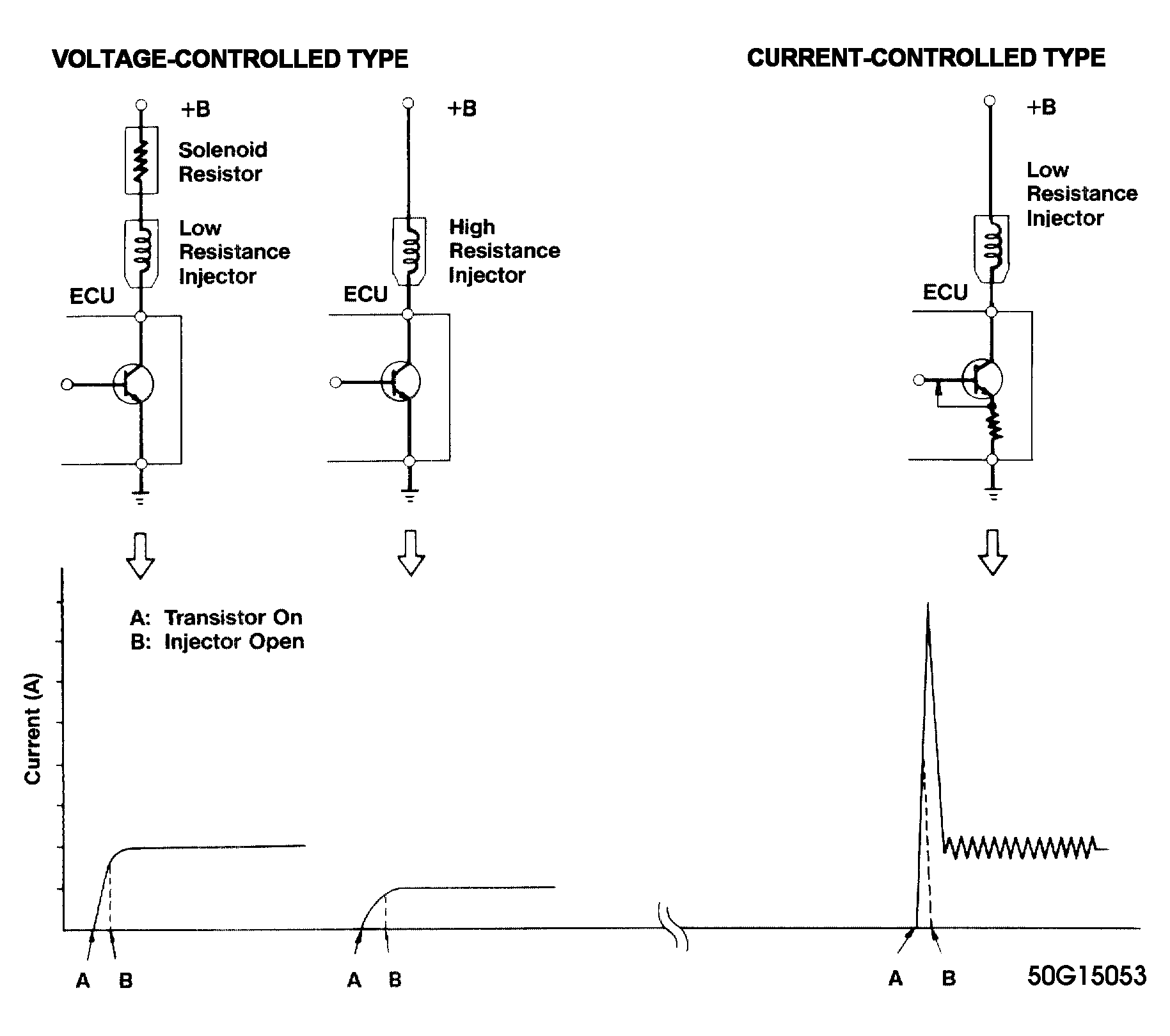
Voltage Controlled Circuit ("Saturated Switch")
The voltage controlled driver inside the computer operates much like a simple switch because it does not need to worry about limiting current flow. Recall, this driver typically requires injector circuits with a total leg resistance of 12 or more ohms.
The driver is either ON, closing/completing the circuit (eliminating the voltage-drop), or OFF, opening the circuit (causing a total voltage drop).
Some manufacturers call it a "saturated switch" driver. This is because when switched ON, the driver allows the magnetic field in the injector to build to saturation. This is the same "saturation" property that you are familiar with for an ignition coil.
There are two ways "high" resistance can be built into an injector circuit to limit current flow. One method uses an external solenoid resistor and a low resistance injector, while the other uses a high resistance injector without the solenoid resistor. See the left side of Fig. Fig 1.
In terms of injection opening time, the external resistor voltage controlled circuit is somewhat faster than the voltage controlled high resistance injector circuit. The trend, however, seems to be moving toward use of this latter type of circuit due to its lower cost and reliability. The ECU can compensate for slower opening times by increasing injector pulse width accordingly.