Run-Flat Tire, SST Tires, Structure And Labelling: Notes
A tire pressure monitoring display is necessary when using run-flat tires.
Tire damage and the pressure loss resulting from it is not always recognizable.
SST tires are identified with a special code (RSC = Run-flat System Component) on the side wall.
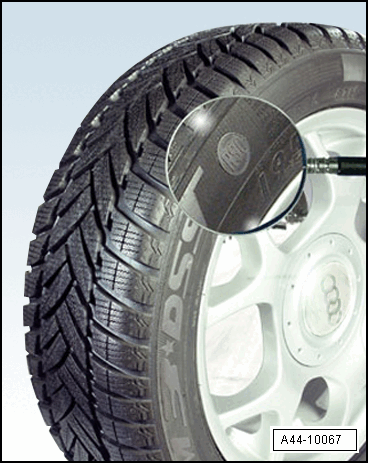
The identification on the side wall of run-flat tires can differ depending on the manufacturer.
Self-Supporting Tire stands for a tire system with emergency running characteristics in the event of a loss of pressure. In the event of a flat tire, the driver can continue driving to a limited extent to the next workshop Owner's Manual.
Advantage
SST tires make it possible to drive up to 50 km (31 miles) at a maximum of 80 km/h (50 mph) even with a complete loss of pressure.
Driving style, speed, road surface, weather conditions, tire condition and tire load influence the distance.
With SST tires, it is not necessary to immediately change a tire when it suffers from a complete loss of pressure (for example no tire changing in an area with low visibility or in dangerous conditions).
Braking, steering and driving performance remain for the most part even after the tire loses pressure.
A spare wheel is no longer necessary when using SST tires. From the view of the customer, this means: saving space and weight.