Brake Pads, Removing And Installing, 1LA/1LB: Installing
If old brake pads are being replaced with new ones, then it is necessary to check the brake rotor thickness for wear. Pay attention to the wear specifications for the brake rotor. Refer to TECHNICAL DATA, BRAKES .
Clean bolts before reusing
Replace the damaged bolts. Refer to the Parts Information.
-- Clean the brake caliper housing.
Only use mineral spirits to clean the brake caliper housing.
Before inserting new brake pads, press the piston back into the cylinder using the piston resetting tool. Before pushing back the piston, extract some of the brake fluid out of the brake fluid reservoir using a bleeder bottle. Otherwise fluid will overflow and cause damage if the reservoir was topped off during repair work.
Brake fluid is poisonous, and must never be siphoned by mouth under any circumstances.
-- Press the piston back.
Use the :T10145 .
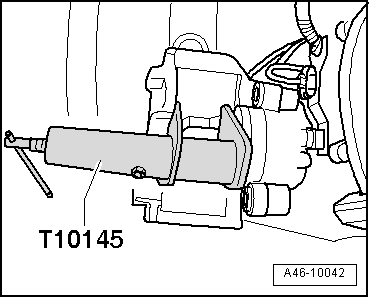
-- Remove any protective film from the brake pad backing plate.
-- Insert the inner brake pad with the spreader spring into the brake caliper housing and brake piston.
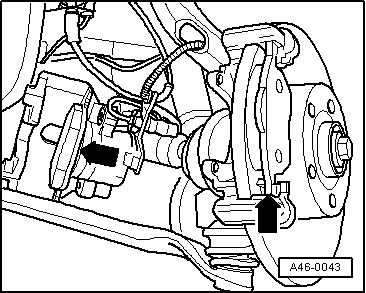
The brake pad with spreader spring sits inside. The spreader spring must be inserted inside the brake piston.
The inner pad with the spreader spring for the brake piston is indicated with an arrow. The arrow must point in the rotation direction of the brake rotor when driving forward. Noises can result from incorrect installation.
-- Install the outer brake pad on the brake carrier.
-- Insert the brake caliper with brake pads
-- Screw in both guide pins -11- into the brake caliper and tighten to the required tightening specification.
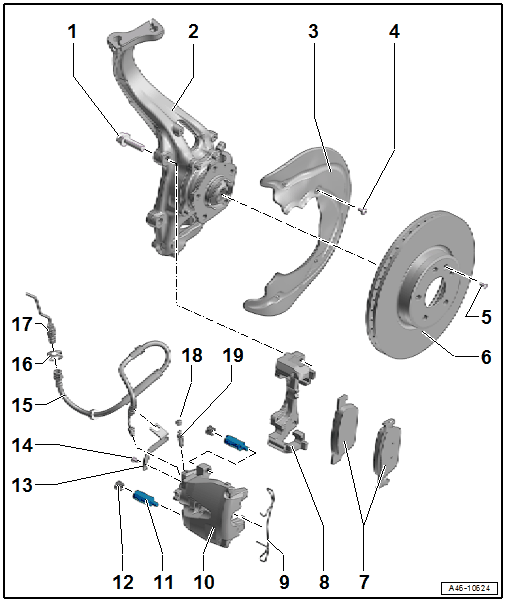
-- :VAG1331/1
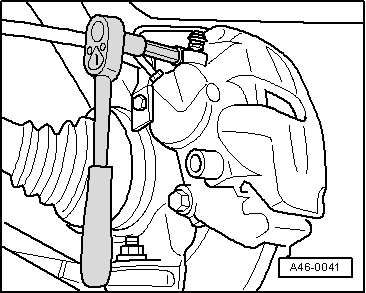
-- Insert both caps -arrows-.
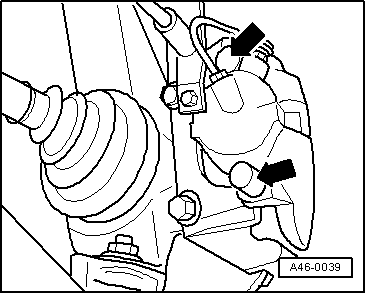
-- Insert the spring into the brake caliper housing.
The spring is under pressure. Hold a hand in front for protection when inserting.
The spring must be pressed under brake carrier after it is inserted in both holes. If improperly installed, the wear of the outer brake pad cannot be adjusted, thereby increasing brake pedal travel.
After inserting the brake pads, press the brake pedal several times firmly to properly seat brake pads in their normal operating position.
-- Check brake fluid level, and fill if necessary.
Make sure the brakes are working correctly before driving the vehicle for the first time.